LIFE IN A KOMMUNALKA (communal apartment)
In
addition to art and literature, the communal apartment not surprisingly is a
key subject in Russian and Soviet film as well, as we have already partially
seen with the clip from "Stilyagi." Let's ring the
doorbell(s) and go inside of three communal apartments in the 1940s and 1950s
from the Russian films "East-West" (1999), "Thief" (1997), and the Yugoslav
film "Tito and Me" (1992).
|
|
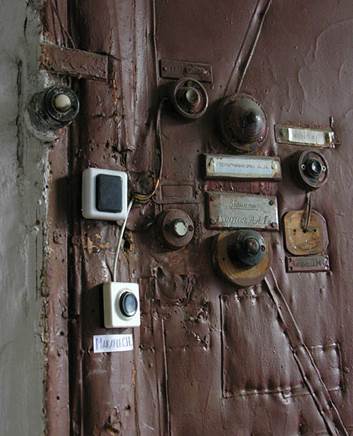
From the blog Kommunalki: "The apartment
doorbells packed without a plan on the door of the old bourgeois flat, all
completely different, but slowly assimilated to each other by the layers of
time, faithfully reflect the nature of the kommunalki. The коммунальная
квартира (communal flat) was a fruit of the
revolution of 1917, called to life by the new collective vision of the future
shorn of private property on the one hand, and by the pressure of the huge
masses of population flowing from the countryside to the cities during the
artificially induced urbanization on the other. Between the first and the
last years of the Soviet Union the proportion of 20:80% between urban and
rural population turned almost exactly to the reverse, but the mass
construction of housing estates. . . started only in the 1960s. As a solution
of the urgent housing problem, the former large bourgeois flats were divided
into several — five to ten — one-room apartments, each for one family, while
hallways, kitchen, bathroom and telephone [if there was one] were shared
among all the residents." |
As
you watch these three brief clips look for similarities and differences:
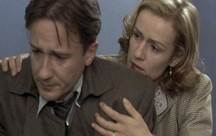
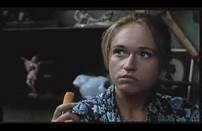
CLIP 1: from "East-West"
(3:53): a Russian émigré is returning home from France
to the USSR soon after WWII with his French wife and son, who do not speak
Russian; in this clip the family is shown around their new communal apartment
and introduced to their neighbors.
|
|
|
|
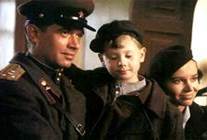
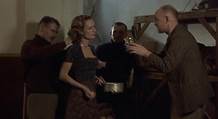
CLIP 2: from "Thief" (2:09): in this film a Russian "soldier" (he is actually a con-man and a thief disguised as a soldier) meets a single mother of a young son on a train in the early 1950s and they decide to live together; here they are searching for living quarters and we get a good look at a communal apartment.
|
|
|
|

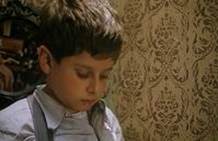
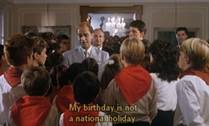
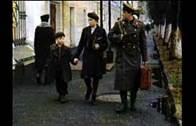
CLIP 3: from "Tito and Me"
(3:33): in this Yugoslav film set in the early 1950s a young boy initially
idolizes the Yugoslav communist leader Tito; in this scene near the beginning
he describes his family's communal living space.
|
|
|
|

OPTIONAL: For additional
information, images, videos, stories, etc. tour the excellent site Communal Living in Russia.
ASSIGNMENT: Write up a 1-2
page reaction/reflection piece to the images, readings, and film clips
for this assignment. How would you describe the key features or aspects of life
in a kommunalka?
What are the similarities and differences highlighted in these various sources
about communal apartment life? Finally, would you favor a similar solution—that
is the conversion of apartments and houses into communal living spaces—in order
to solve the problem of homelessness in the United States today? Why or why
not?